Rec League
Music & Film

Drama Series

Music & Film

Browse drama series recommendations from people with great taste on Rec League — the whisper network for great recs.

Practica logoPractica
Bert Cooper

Bert Cooper

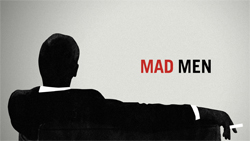
We adore Mad Men and see it as arguably the most Practica-coded piece of media out there (see our Practica-coded TV & Movies collection for more). So very many of the various leaders highlighted throughout the series speak to us but we'd probably tell you that overall, you have the most to learn about being a leader from none other than the elderly, eccentric, Japanophilic Bertram Cooper. Bert Cooper is exceptional not because he's modern, inspiring, egalitarian or even morally admirable. He's an exceptional leader because he understands something too few executives do: power is often exercised through timing, restraint, incentives, symbolism, and knowing when not to intervene. Let's get into the specifics. 1. He understands the importance of atmosphere. Bert doesn't manage the agency through constant meetings, declarations, or motivational speeches. He is a vibe king. The shoes-off office, that massive Rothko, the Japanese aesthetics, the odd quips and the overabundance of silence all create a sense that Sterling Cooper is more of a world with its own rules than a typical workplace. 2. He has a remarkable strength in his perception. He clocks Don early and often. He can see Roger’s laziness, Pete’s ambition, Lane’s unique usefulness, Joan’s misunderstood competence, and the agency’s ever shifting power centers. He understands the value of both talent and character. 3. He knows when to let conflict reveal the truth. Bert allows tension to play out rather than rushing to resolve it. He lets Don and Roger, Don and Pete, the partners, the clients, and the firm itself show what they are made of under pressure. Bert understands that premature intervention often hides or at least artificially delays the real issue. 4. He is careful with his words. Bert never over-explains. He says odd, memorable things that function almost like riddles or verdicts. As a result, people listen to every thing that comes out of his mouth. 5. He understands incentives better than ideals. Bert is never naïve about human motivation. He knows people want money, status, ownership, approval, sex, security, legacy, escape, and victory. He doesn't pretend that organizations run on values alone. 6. He respects talent, even when he disapproves of the person behind it. Bert knows Don is a mystery and a risk. He also knows Don is extraordinary. He responds to Don’s deepest secret by saying... that it does not matter as long as Don keeps performing. This is a ruthless pragmatist at work. 7. He thinks like an owner. More than a mere executive would, Bert thinks in terms of firm value, leverage, succession, risk, and survival. He couldn't care less about appearing busy because owners do not need to perform busyness. They care about the enterprise. The distance gives him a genuine authority that would otherwise be inaccessible. He is not without his flaws He can be too detached. He is comfortable with exclusion. He overvalues performance. He avoids what is emotional. Bert is, of course, flawed. But he is also careful to hire and nurture that which balances out his flaws. And for those who are beyond deep, significant personal growth — that's the best they can do. If we were going to distill his leadership strategy into a practical framework: 1. Watch before acting. 2. Speak less, mean more. 3. Understand what people want. 4. Use ownership as alignment. 5. Shape the room. 6. Protect the institution from its stars. 7. Know when not to be the main character.

Practica logoPractica
Jed Bartlet

Jed Bartlet

Watching The West Wing in 2026 can feel like torture. Is it still the best? Yes. Has our modern political moment drifted so far south that this otherwise balanced take on the American presidency begun to feel like an absurdist fantasy land? Also yes. Our absurdist fantasy POTUS Jed Bartlet is exceptional because he combines moral sincerity, intellectual range, emotional fluency, and institutional respect. He is never portrayed as a perfect man or president. In fact, our favorite lessons come directly from his flaws: secrecy, arrogance, indecision, and the occasional belief that being the smartest person in the room entitles him to bypass process. That being said, at his best, he represents an increasingly rare style of leadership that in essence high standards with deep humanity. Here are some more specific things we notice: 1. He treats leadership as stewardship. Bartlet does not see the presidency as a vehicle for personal brand, resentment, or victory laps. He knows that it's custodianship of something larger than himself and that people who will live with the consequences of his decision-making making after he is gone. 2. Bartlet’s intelligence is more than cleverness. He can move between economics, theology, law, military strategy, ethics, history, agriculture, and human psychology. He thinks in systems and understands that a policy decision is also a moral signal, a political tradeoff, an operational challenge, and a human consequence. He knows that leadership is more than having all the answers and is willing to be challenged by people who know more than he does in specific domains. 3. He surrounds himself with people who can 'No Men'. One of his greatest leadership moves is choosing staff who are independently formidable: Leo, C.J., Toby, Josh, Sam, Abbey, Nancy McNally and Fitzwallace all argue with him. They disappoint him. They push back. They tell him when he is wrong. 4. He knows that leaders communicate more through priorities, appointments, silences, pardons and punishments than they ever do via speeches. 5. He deftly balances compassion with strength. Bartlet notices signs of grief, fear, loyalty, humiliation, and burnout. He comforts. He quotes scripture. He visits hospital rooms. He can make brutal decisions without losing sight of the fact that his staff are human beings dealing with extraordinary pressure. 7. He has impressive command over the English language. Bartlet uses seemingly the perfect words to teach, console, persuade, rebuke, inspire, create moral clarity and reframe an otherwise chaotic situation. 8. He knows when and how to absorb blame. A good leader protects the institution and the team when necessary. No matter how prideful, he understands that the person at the top has to absorb pressure others cannot. 9. He can change his mind without abandoning his principles. In fact, most of his best decisions come after argument, grief, counsel, or confrontation. Even his flaws are instructive He can be arrogant. He sometimes hides behind intellect. He can humiliate people. He can over-explain. He can turn moral certainty into condescension. He withholds information when he thinks he knows best. He sometimes romanticizes the burden of leadership. What's more important than his flaws is that he can be aware of them, learn from them and move in the right direction towards meaningful change. If we were going to distill his leadership strategy into a practical framework: 1. Build a room that can and will tell you the truth. 2. Know the moral shape of the decision. 3. Use language to create clarity. 4. Protect your team's dignity. 5. Respect the institution. 6. Take responsibility publicly. 7. Let yourself be challenged.

There's so much more to explore

Rec League is the whisper network for great recs — thousands of recommendations from people with brilliant, unexpected taste.

Get the app
or sign up on the web