Share this starter pack
Download or share an image.

My Rec League Starter Pack
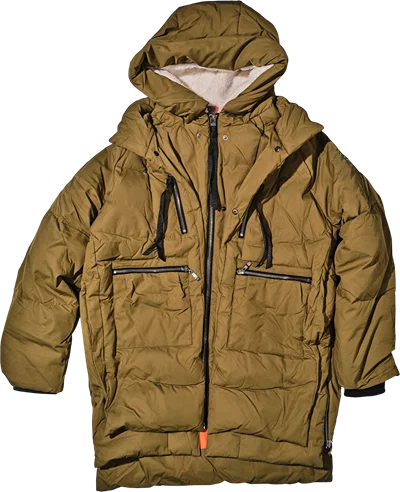
The Amazon coat that took over the Upper East Side — and then the world
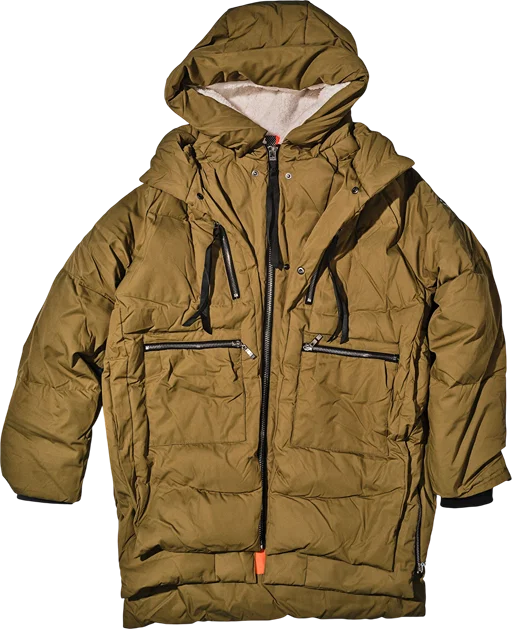
In the winter of 2018, every woman on the Upper East Side started wearing an unassuming olive-green coat. It was cheap, made by an unknown Chinese brand called Orolay, and, by March of that year, installed in online-shopping history as “the Amazon Coat” (you can read the full oral history, too). Like all great legends, its origin is shrouded in mystery. No one knows exactly who bought the first Orolay coat, but by the time it caught the attention of Schneider, then the Strategist’s associate editor, it was all over town. “The coat’s appeal lies in its fashionable-yet-accessible, lightly directional look … and its startling price — the super-stylish women who own it take pleasure in telling curious onlookers that no, their jacket is not Sacai, and, actually, it costs under $100, including shipping if you’re an Amazon Prime member,” wrote Schneider. It had spread the old-fashioned way — by word of mouth among sharply dressed uptown women who saw their friend wearing it, then bought one, then told their friend, who bought one, too, and so on and so on, until uptown sidewalks were a sea of Army green. Once we published our story, the coat went from an if-you-know-you-know status symbol to a now-everyone-knows viral item. It broke containment from the Upper East Side, to the point that you couldn’t walk down the street or take the subway anywhere without seeing one. Nowadays, products go viral all the time — all it really takes is a single TikTok video or trend piece to catch on before everyone is suddenly wearing the same thing — but at the time, the Amazon Coat was one of the first. Thousands of people bought it, it was covered by countless publications, and it even inspired its own very popular Instagram account. Of course, the life cycle of any viral product ends the same way: Once everyone has it, no one really wants it anymore. And while the Amazon coat is mostly relegated to the back of people’s closets now, you still see the odd one in the wild every winter. It really is quite warm. —D.P.
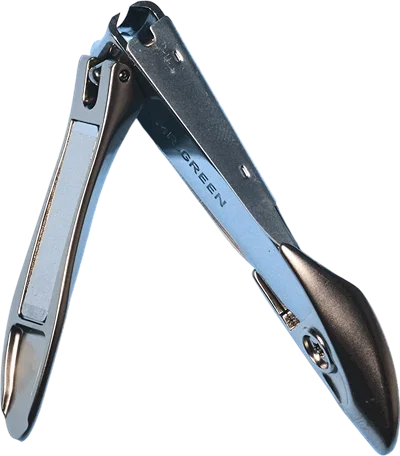
The Japanese nail clipper you suddenly didn’t need to go to Japan to buy
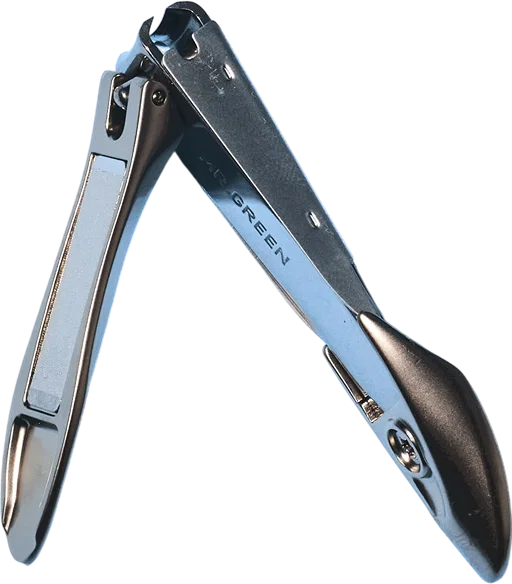
A decade ago, with 1,700 yen to blow at the Narita airport, Jason Chen, the former Strategist deputy editor who became a Wirecutter editor in 2019, picked up a pair of Green Bell nail clippers. “The Green Bell slices through nails like a Santoku through a tomato. Makes sense, given that they were made in Seki, the city famed throughout Japan for creating Samurai swords,” he wrote. “The Japanese clippers, as you’d expect from a country that’s always elevated the mundane with powerful design, have a pleasing frosted-Champagne finish and the serious weight of a small stapler.” What was perhaps less expected was the fact that no flight to Tokyo was required to pick up a pair — they were already available on Amazon. “I was super surprised,” says Chen. “I thought they were a Japan-only thing.” While that discovery might not seem very exciting now, back then, there was a certain rush to finding international products online for the first time. Items you once had to beg your friend to bring back in their carry-on — French moisturizers, Korean sunscreens, Japanese notebooks — were now available to ship from halfway across the world. Chen also discovered a windproof, lopsided Dutch umbrella in Amsterdam that is almost impossible to blow inside out. Then our global finds kept coming. A nifty collapsible Midori pen, tubes of Biafine and Homeoplasmine and A313, our beloved Hobonichi Techo. That little thrill of discovery was like wandering the aisles of a grocery store or beauty-supply shop abroad, and adding a bottle of Nuxe’s dry oil to your late-night toilet-paper order made you feel like a citizen of the world. It also made all of us realize just how small the world was becoming. “Ten years later, I’m still a devotee,” adds Chen of his nail clippers. “I have three of them now: one in each bathroom and another for my travel dopp.” Because traveling is still fun (even if you don’t need to schlep souvenirs back anymore). —Dominique Pariso, Strategist senior writer
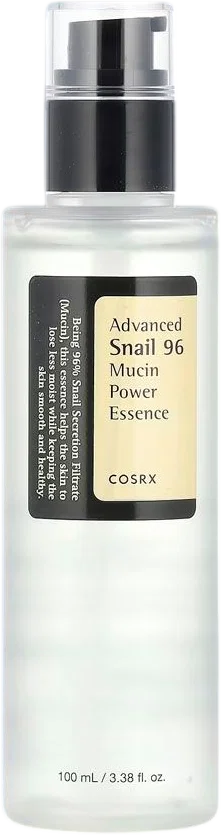
Snail mucin from the Google Doc (you know the one)
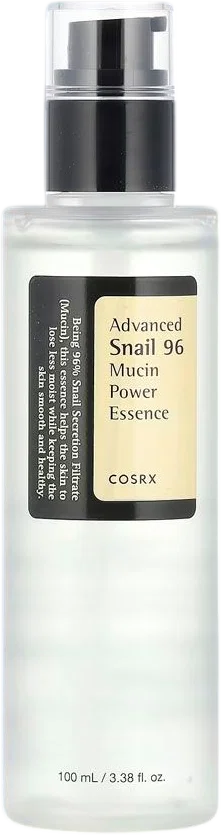
Like so many Strategist articles, the original Google Doc was born out of personal obsession — one I really thought only my closest friends would find interesting. At the time, I was going through an especially difficult period with my skin: unrelenting cystic, hormonal acne. So I found myself exploring every fix I could find. I went down a deep skin-care rabbit hole and, in the process, became a serious fan of K-beauty. At that time, 2016, the category was really only known among hardcore skin-care and beauty obsessives. I don’t remember exactly how I discovered CosRx Snail Mucin, though I suspect I found it at my favorite beauty store, Senti Senti in Chinatown. What I do remember is being immediately struck by how beautiful the formula was. It was the first product I’d ever used that seemed to address the many contradictory demands of my finicky, dry, acne-prone skin. I honestly couldn’t tell you how many bottles of snail mucin I’ve gone through over the years. I compiled everything into what eventually became a master Google Doc of the 16 products that improved my acne — obviously including the snail mucin — and passed it around to my friends simply because it was easier to have it in one place, rather than explaining the whole process over and over. Somehow, the doc made its way to Katy Schneider, who’s still an editor at New York Magazine (I love you, Katy!), and she asked if I would be interested in adapting it for publication on the Strategist. It felt truly insane to have something I made out of pure, genuine curiosity and obsession be taken seriously by someone else. The first time someone came up to me to say they’d loved the article, I was standing outside the restaurant Lovely Day on Elizabeth and Spring. I could hardly believe it. People still bring it up to me, and it never stops feeling both surreal and very touching. Before I started writing for the Strategist, I knew how much I loved skin care, but my experience here showed me just how rewarding it was to help people navigate beauty and, more important, make them feel seen and understood. Having struggled with acne for most of my life, I understood firsthand how overwhelming it could be. I wanted to be the person who could make that experience feel a little less daunting and maybe even a little less lonely. I’m not exaggerating when I say that one article kind of dictated the course of my career. In the nineish years since, I’ve become a licensed esthetician and started working one-on-one with clients through my skin-care consultation practice. I’ve published a book, Let’s Face It: Secrets of a Skincare Obsessive, and I’ve also had the privilege of consulting with brands on product development and storytelling. None of this would have been possible without the Strategist taking a chance on a random skin-care-stuffed Google Doc. How has it been ten years? —Rio Viera-Newton, contributing writer
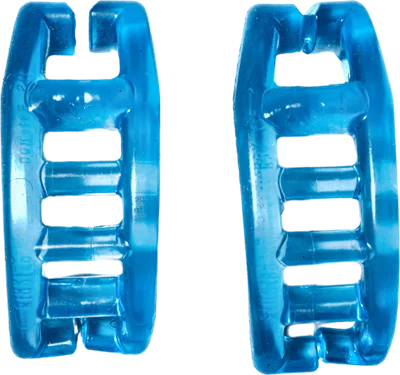
The YogaToes that really are incredible
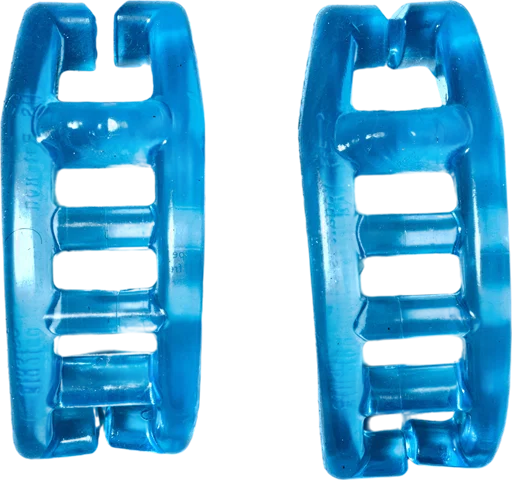
There is something truly bizarre, a little unsettling even, about an item ending up on this list because my grandma once had two toes amputated. But sometimes life is just like that. You never really know what’s coming — or what exactly you might need to deal with it — until it’s right in front of you. That’s how it was with my YogaToes, the squishy, ladderlike toe separators that I’d put on at the end of most days in an effort to avoid bunions (a lifelong fear), hammertoes (the ailment behind those amputations), and really any and all podiatric-related issues. I learned about them from my mom, who, the story goes, had one vice — buying shoes — until she gave it all up for comfort and surgery-free feet. The trait was inherited. I guess I felt comfortable talking about this in my place of work because the Strategist has always respected — revered, really — the unquantifiable doodad. The little unexpected things that come out of nowhere and change your life. Everyone here realized that a lot of other people are probably suffering through your highly particular neuroses, too. (I’ve since learned Kelly Rowland and Simon Rex also can’t live without toe separators). But it’s not just that. There’s a twofold appeal to reading about a doodad: Half of it is about how you learned of the thing (an opera singer’s neck stretcher, Ike Barinholtz’s instant coffee), and the other half is that it ever existed in the first place (AirPod condoms). It’s the TubShroom, the bendy piece of foam that’s actually the best phone stand, a foot sling for planes, a neck hammock for headaches, a doohickey to get rid of chin hairs, and a different doohickey to get rid of mosquito bites. The site has become a compendium of the most useless useful stuff. The not-too-expensive little things that really are incredible. I mean, how else would you ever know they existed? It wasn’t about how many hours I tested this little jellyish, aqua-blue toe-stretcher or how many scientific studies proved its worth. It was about how it made me feel — both my toes and my mind. The funny thing is that ten years later, my mom now works at a podiatrist’s office, I left and then returned to the Strategist, and we’ve all still got YogaToes in our nightstand drawers. —Lauren Levy, lead editor
My Rec League Starter Pack
The Amazon coat that took over the Upper East Side — and then the world
In the winter of 2018, every woman on the Upper East Side started wearing an unassuming olive-green coat. It was cheap, made by an unknown Chinese brand called Orolay, and, by March of that year, installed in online-shopping history as “the Amazon Coat” (you can read the full oral history, too). Like all great legends, its origin is shrouded in mystery. No one knows exactly who bought the first Orolay coat, but by the time it caught the attention of Schneider, then the Strategist’s associate editor, it was all over town. “The coat’s appeal lies in its fashionable-yet-accessible, lightly directional look … and its startling price — the super-stylish women who own it take pleasure in telling curious onlookers that no, their jacket is not Sacai, and, actually, it costs under $100, including shipping if you’re an Amazon Prime member,” wrote Schneider. It had spread the old-fashioned way — by word of mouth among sharply dressed uptown women who saw their friend wearing it, then bought one, then told their friend, who bought one, too, and so on and so on, until uptown sidewalks were a sea of Army green. Once we published our story, the coat went from an if-you-know-you-know status symbol to a now-everyone-knows viral item. It broke containment from the Upper East Side, to the point that you couldn’t walk down the street or take the subway anywhere without seeing one. Nowadays, products go viral all the time — all it really takes is a single TikTok video or trend piece to catch on before everyone is suddenly wearing the same thing — but at the time, the Amazon Coat was one of the first. Thousands of people bought it, it was covered by countless publications, and it even inspired its own very popular Instagram account. Of course, the life cycle of any viral product ends the same way: Once everyone has it, no one really wants it anymore. And while the Amazon coat is mostly relegated to the back of people’s closets now, you still see the odd one in the wild every winter. It really is quite warm. —D.P.
The Japanese nail clipper you suddenly didn’t need to go to Japan to buy
A decade ago, with 1,700 yen to blow at the Narita airport, Jason Chen, the former Strategist deputy editor who became a Wirecutter editor in 2019, picked up a pair of Green Bell nail clippers. “The Green Bell slices through nails like a Santoku through a tomato. Makes sense, given that they were made in Seki, the city famed throughout Japan for creating Samurai swords,” he wrote. “The Japanese clippers, as you’d expect from a country that’s always elevated the mundane with powerful design, have a pleasing frosted-Champagne finish and the serious weight of a small stapler.” What was perhaps less expected was the fact that no flight to Tokyo was required to pick up a pair — they were already available on Amazon. “I was super surprised,” says Chen. “I thought they were a Japan-only thing.” While that discovery might not seem very exciting now, back then, there was a certain rush to finding international products online for the first time. Items you once had to beg your friend to bring back in their carry-on — French moisturizers, Korean sunscreens, Japanese notebooks — were now available to ship from halfway across the world. Chen also discovered a windproof, lopsided Dutch umbrella in Amsterdam that is almost impossible to blow inside out. Then our global finds kept coming. A nifty collapsible Midori pen, tubes of Biafine and Homeoplasmine and A313, our beloved Hobonichi Techo. That little thrill of discovery was like wandering the aisles of a grocery store or beauty-supply shop abroad, and adding a bottle of Nuxe’s dry oil to your late-night toilet-paper order made you feel like a citizen of the world. It also made all of us realize just how small the world was becoming. “Ten years later, I’m still a devotee,” adds Chen of his nail clippers. “I have three of them now: one in each bathroom and another for my travel dopp.” Because traveling is still fun (even if you don’t need to schlep souvenirs back anymore). —Dominique Pariso, Strategist senior writer
Snail mucin from the Google Doc (you know the one)
Like so many Strategist articles, the original Google Doc was born out of personal obsession — one I really thought only my closest friends would find interesting. At the time, I was going through an especially difficult period with my skin: unrelenting cystic, hormonal acne. So I found myself exploring every fix I could find. I went down a deep skin-care rabbit hole and, in the process, became a serious fan of K-beauty. At that time, 2016, the category was really only known among hardcore skin-care and beauty obsessives. I don’t remember exactly how I discovered CosRx Snail Mucin, though I suspect I found it at my favorite beauty store, Senti Senti in Chinatown. What I do remember is being immediately struck by how beautiful the formula was. It was the first product I’d ever used that seemed to address the many contradictory demands of my finicky, dry, acne-prone skin. I honestly couldn’t tell you how many bottles of snail mucin I’ve gone through over the years. I compiled everything into what eventually became a master Google Doc of the 16 products that improved my acne — obviously including the snail mucin — and passed it around to my friends simply because it was easier to have it in one place, rather than explaining the whole process over and over. Somehow, the doc made its way to Katy Schneider, who’s still an editor at New York Magazine (I love you, Katy!), and she asked if I would be interested in adapting it for publication on the Strategist. It felt truly insane to have something I made out of pure, genuine curiosity and obsession be taken seriously by someone else. The first time someone came up to me to say they’d loved the article, I was standing outside the restaurant Lovely Day on Elizabeth and Spring. I could hardly believe it. People still bring it up to me, and it never stops feeling both surreal and very touching. Before I started writing for the Strategist, I knew how much I loved skin care, but my experience here showed me just how rewarding it was to help people navigate beauty and, more important, make them feel seen and understood. Having struggled with acne for most of my life, I understood firsthand how overwhelming it could be. I wanted to be the person who could make that experience feel a little less daunting and maybe even a little less lonely. I’m not exaggerating when I say that one article kind of dictated the course of my career. In the nineish years since, I’ve become a licensed esthetician and started working one-on-one with clients through my skin-care consultation practice. I’ve published a book, Let’s Face It: Secrets of a Skincare Obsessive, and I’ve also had the privilege of consulting with brands on product development and storytelling. None of this would have been possible without the Strategist taking a chance on a random skin-care-stuffed Google Doc. How has it been ten years? —Rio Viera-Newton, contributing writer
The YogaToes that really are incredible
There is something truly bizarre, a little unsettling even, about an item ending up on this list because my grandma once had two toes amputated. But sometimes life is just like that. You never really know what’s coming — or what exactly you might need to deal with it — until it’s right in front of you. That’s how it was with my YogaToes, the squishy, ladderlike toe separators that I’d put on at the end of most days in an effort to avoid bunions (a lifelong fear), hammertoes (the ailment behind those amputations), and really any and all podiatric-related issues. I learned about them from my mom, who, the story goes, had one vice — buying shoes — until she gave it all up for comfort and surgery-free feet. The trait was inherited. I guess I felt comfortable talking about this in my place of work because the Strategist has always respected — revered, really — the unquantifiable doodad. The little unexpected things that come out of nowhere and change your life. Everyone here realized that a lot of other people are probably suffering through your highly particular neuroses, too. (I’ve since learned Kelly Rowland and Simon Rex also can’t live without toe separators). But it’s not just that. There’s a twofold appeal to reading about a doodad: Half of it is about how you learned of the thing (an opera singer’s neck stretcher, Ike Barinholtz’s instant coffee), and the other half is that it ever existed in the first place (AirPod condoms). It’s the TubShroom, the bendy piece of foam that’s actually the best phone stand, a foot sling for planes, a neck hammock for headaches, a doohickey to get rid of chin hairs, and a different doohickey to get rid of mosquito bites. The site has become a compendium of the most useless useful stuff. The not-too-expensive little things that really are incredible. I mean, how else would you ever know they existed? It wasn’t about how many hours I tested this little jellyish, aqua-blue toe-stretcher or how many scientific studies proved its worth. It was about how it made me feel — both my toes and my mind. The funny thing is that ten years later, my mom now works at a podiatrist’s office, I left and then returned to the Strategist, and we’ve all still got YogaToes in our nightstand drawers. —Lauren Levy, lead editor